
Polystyrene — whether in the form of expanded polystyrene (EPS) packaging, polystyrene food containers, or rigid polystyrene mouldings — is one of the most controversial materials in the waste management world. Many businesses assume it can't be recycled and send it to landfill at significant cost. But the truth is more nuanced: polystyrene is recyclable, and with the right equipment, it can become a valuable commodity rather than an expensive disposal problem.
The Short Answer: Yes, Polystyrene Is Recyclable
Polystyrene is a thermoplastic, which means it can be melted down and reformed into new products. Both expanded polystyrene (EPS) and rigid polystyrene (PS) are recyclable. The challenge isn't the material itself — it's the volume-to-weight ratio. Expanded polystyrene is approximately 95% air, which means a skip full of EPS weighs very little but takes up enormous space. This makes transport to a recycling facility uneconomical unless the material is compacted first.
The Real Problem: Volume, Not Recyclability
The reason many waste collectors refuse polystyrene is simple economics. A lorry load of loose EPS might weigh only a few hundred kilograms — not enough to cover the cost of transport. But when polystyrene is compacted using a specialist polystyrene compactor, its volume can be reduced by up to 90%, and its density increases dramatically. A compacted polystyrene block is dense enough to be transported economically and can even be sold to recyclers who process it into pellets for new products.
How Polystyrene Compactors Work
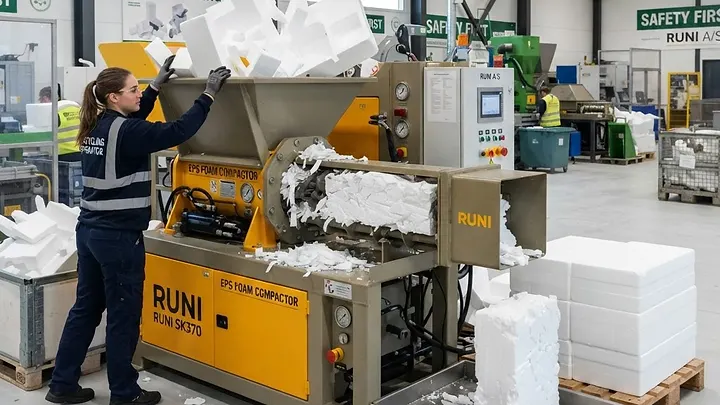
A polystyrene compactor uses a screw mechanism to crush and extrude EPS through a heated nozzle, producing a dense, continuous log of compacted polystyrene. These logs can be cut to size and stacked for collection. The compaction process doesn't melt the polystyrene — it mechanically compresses it, which means the material retains its recyclable properties.
Key benefits of polystyrene compactors include:
- Volume reduction of up to 90% — dramatically reduces storage space and collection frequency
- Densified blocks are saleable — recyclers will pay for compacted polystyrene
- Low energy consumption — modern compactors are energy-efficient and quiet
- Simple operation — feed loose EPS in, get compacted logs out
Who Should Invest in a Polystyrene Compactor?
If your business regularly disposes of more than a few bags of polystyrene per week, a compactor is likely a worthwhile investment. Common users include:
- Furniture and appliance retailers handling large volumes of EPS packaging
- Fish processors and food manufacturers using polystyrene boxes
- Electronics manufacturers and distributors
- Waste management companies offering polystyrene recycling services
The Environmental Case
Polystyrene takes hundreds of years to break down in landfill. By compacting and recycling it, businesses not only reduce their disposal costs but also contribute to a circular economy where polystyrene is reprocessed into picture frames, coat hangers, insulation products, and even new packaging. With landfill taxes rising and environmental regulations tightening, polystyrene compaction is increasingly becoming a necessity rather than a choice.
Find the Right Polystyrene Solution
MHM UK Ltd offers a range of polystyrene compactors and can advise on the best solution for your waste volumes. Contact our team for a free consultation, or explore our polystyrene compactors to find the right machine for your business.