
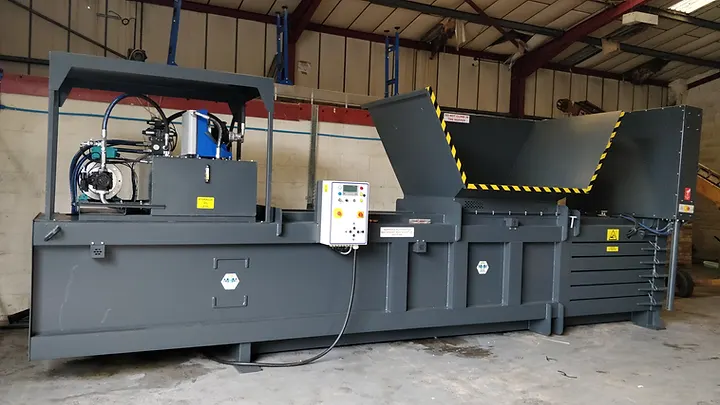
Why Choosing the Right Baler Matters
Investing in a waste baler is one of the most effective ways for a business to reduce waste disposal costs, free up valuable space, and even generate revenue from recyclable materials. But with several types of balers available—vertical, semi-automatic, and fully automatic—selecting the right one for your specific needs is essential to maximise return on investment.
Understand Your Waste Volume
The first step is understanding how much waste your business produces. Low-volume producers, such as small retail shops or offices, are well served by a vertical baler like the MHM 60 or MHM 200. These compact machines produce bales up to 500kg and require minimal floor space.
Medium to large operations—warehouses, manufacturers, and distribution centres—benefit from semi-automatic horizontal balers, which handle higher throughputs and produce denser, heavier bales. For continuous, 24/7 waste production, a fully automatic baler with autonomous wire feeding is the best choice.
Consider Your Waste Material
Different materials bale differently. Cardboard and plastic film are the most common baled materials, but our balers also handle paper, textiles, and mixed recyclables. If you produce multiple material types, consider baling them separately to maximise the recycling value of each bale.
Evaluate Your Available Space
Vertical balers have a small footprint and are ideal for sites with limited space. Horizontal balers are larger but offer significantly higher throughput. Consider not just the baler footprint but also the space needed for feeding material, removing bales, and storing finished bales before collection.
Think About Budget and ROI
Vertical balers offer the lowest capital investment and fastest ROI for small to medium waste producers. Semi-automatic balers cost more but handle higher volumes. Fully automatic balers are the most expensive but enable 24/7 operation with minimal labour. Many businesses see a return on investment within months through reduced collection costs and revenue from selling baled recyclables.
Need Help Choosing?
Our team at MHM UK LTD can help you select the right baler based on your waste volume, material types, available space, and budget. Contact us for a tailored recommendation or try our waste savings calculator to estimate your potential savings.