
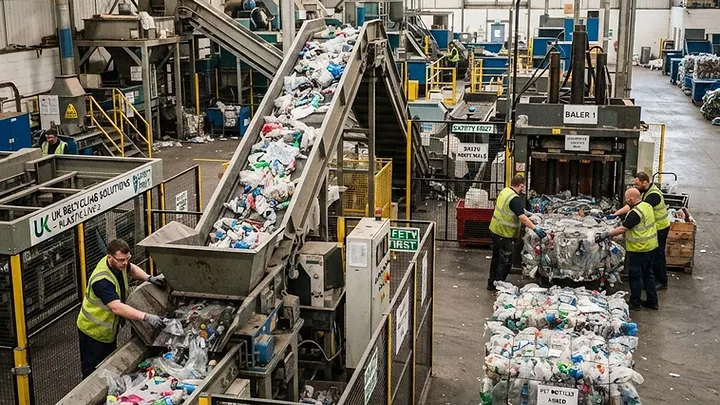
Plastic waste is one of the most pressing environmental challenges facing UK businesses today. With the UK government's commitment to eliminate avoidable plastic waste and the rising cost of landfill disposal, investing in the right plastic recycling machinery has never been more important. This guide explores the key types of plastic recycling equipment available in the UK and how to choose the right solution for your business.
Understanding Plastic Waste Types
Before investing in machinery, it's essential to understand the types of plastic waste your business generates. Different plastics require different handling:
- Plastic film and shrink wrap — commonly used in packaging, this is best handled by a baler that can produce dense, mill-size bales
- PET bottles and containers — these can be baled or compacted, depending on volume
- Rigid plastics — crates, tubs, and mouldings require more powerful compaction
- Mixed plastic waste — may need sorting before processing
Key Types of Plastic Recycling Machinery
Plastic Film Balers
Plastic film — including shrink wrap, pallet wrap, and carrier bags — is lightweight and bulky. A dedicated plastic baler compresses this material into dense bales that can be sold to recyclers. Vertical balers are suitable for smaller volumes, while semi-automatic and fully automatic horizontal balers handle higher throughputs.
PET Bottle Compactors
For businesses generating large volumes of PET bottles — such as drinks manufacturers, retailers, and event venues — a PET bottle compactor can reduce volume by up to 90%, making storage and transport far more efficient.
Plastic Granulators
For businesses that need to process plastic into a reusable raw material, granulators shred plastic waste into small flakes that can be sold directly to reprocessors or used in-house for new products.
The UK Plastic Recycling Landscape
The UK's plastic recycling infrastructure has evolved significantly in recent years. Key developments include:
- Plastic Packaging Tax — introduced in 2022, this tax incentivises the use of recycled plastic, increasing demand for processed recyclate
- Extended Producer Responsibility (EPR) — shifting the cost of packaging waste onto producers, making in-house recycling more cost-effective
- Export restrictions — tighter controls on exporting plastic waste mean more processing must happen domestically
These factors have increased the value of baled and compacted plastic, making investment in recycling machinery more financially attractive than ever.
Choosing the Right Machine
When selecting plastic recycling machinery, consider:
- Volume of plastic waste — daily and weekly tonnage determines the size and type of machine needed
- Plastic types — mixed plastics may need different equipment than single-stream waste
- Available space — vertical balers have a small footprint; horizontal balers require more floor space
- Budget — hire and lease options are available for businesses that prefer to spread the cost
The Business Case
Investing in plastic recycling machinery delivers three key benefits:
- Reduced disposal costs — compacted plastic costs less to store and transport
- Revenue from recyclate — baled plastic film and PET have a rebated value
- Compliance and reputation — demonstrating responsible waste management supports environmental compliance and enhances brand reputation
Get Expert Guidance
MHM UK Ltd supplies a full range of plastic recycling machinery, from vertical balers for small volumes to fully automatic horizontal balers for high-throughput operations. Contact our team for tailored advice, or explore our plastic balers to find the right equipment for your business.